

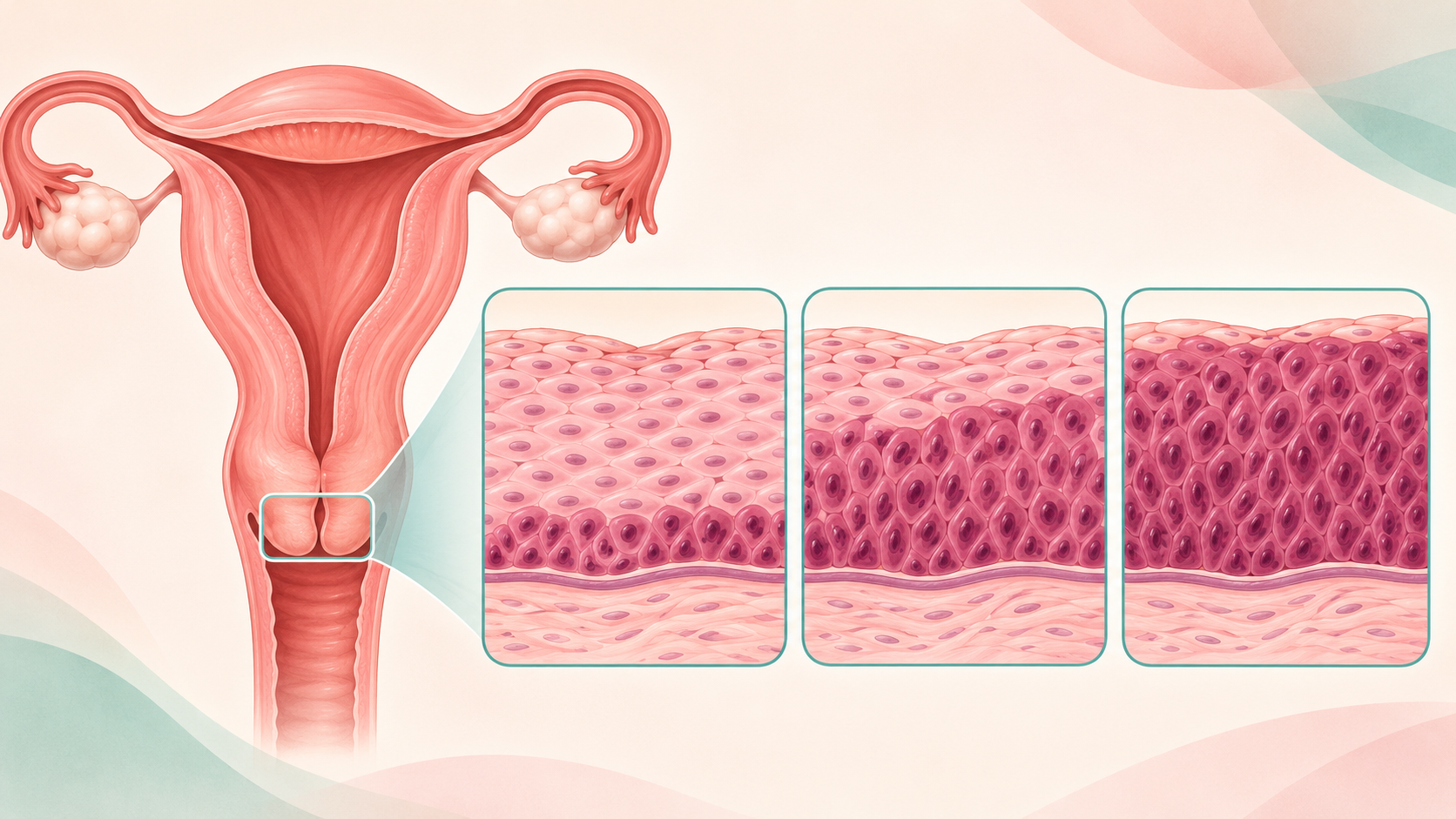
Receiving a cervical biopsy report with terms such as CIN 1, CIN 2 or CIN 3 can be confusing, especially if you are unfamiliar with cervical health terminology. One of the first concerns many women have is whether these results mean they have cervical cancer.
The good news is that CIN does not automatically mean cancer. It describes abnormal changes in the cells covering the cervix, which can be identified through examination of a tissue sample under a microscope.
Understanding what each grade means can help women make informed decisions about follow-up care and treatment.
What Is Cervical Intraepithelial Neoplasia (CIN)?
Cervical Intraepithelial Neoplasia (CIN) refers to abnormal changes in the cells on the surface of the cervix. These changes are commonly associated with persistent infection with high-risk types of Human Papillomavirus (HPV).
CIN is usually identified through a cervical biopsy, often performed following an abnormal cervical screening result and colposcopy examination.
It is classified into three grades based on the severity and extent of the abnormal cell changes.
Understanding CIN 1, CIN 2 and CIN 3
1. CIN 1 – Mild Cell Changes
CIN 1 represents low-grade abnormalities affecting approximately the lower third of the cervical lining.
It is generally considered a mild abnormality and is not cervical cancer. In many cases, the body’s immune system clears the associated HPV infection, allowing the abnormal cells to return to normal without treatment.
Most women with CIN 1 are monitored through follow-up examinations rather than receiving immediate treatment.
2. CIN 2 – Moderate Cell Changes
CIN 2 represents more significant abnormalities, affecting approximately two-thirds of the cervical lining.
It is classified as a high-grade cervical lesion because it carries a greater risk of progressing to more severe abnormalities if left unmanaged.
Depending on factors such as age, clinical findings and individual risk, management may involve close monitoring or treatment to remove the affected cells.
3. CIN 3 – Severe Cell Changes
CIN 3 represents severe abnormalities involving almost the entire thickness of the cervical lining.
Although CIN 3 is not invasive cervical cancer, it is considered a high-grade precancerous condition with a significant risk of progression if left untreated.
Treatment is generally recommended to remove the abnormal tissue and prevent possible progression to cervical cancer.
Does CIN 1, CIN 2 or CIN 3 Mean You Have Cervical Cancer?
No. This is an important distinction.
CIN 1, CIN 2 and CIN 3 describe abnormal changes that are limited to the surface lining of the cervix. They are not the same as invasive cervical cancer.
However, higher-grade abnormalities, particularly CIN 2 and CIN 3, require appropriate medical assessment and management to reduce the risk of future progression.
Early detection through cervical screening, colposcopy and biopsy plays an important role in preventing cervical cancer.
What Happens After an Abnormal Cervical Biopsy Result?
The next step depends on the grade of CIN identified and the woman’s individual clinical circumstances.
Management may include:
- Monitoring: Regular follow-up examinations to determine whether abnormal cells have disappeared, persisted or progressed.
- Colposcopy: A detailed examination of the cervix to assess abnormal areas.
- Treatment: Procedures such as Loop Electrosurgical Excision Procedure (LEEP) may be recommended to remove abnormal cervical tissue.
It is important to attend recommended follow-up appointments, even when there are no noticeable symptoms.
Why Early Detection Matters
Cervical cancer often develops gradually, passing through precancerous changes that can be detected and managed before they become invasive cancer.
Understanding biopsy results helps women seek appropriate care at the right time. Regular cervical screening, HPV vaccination and timely follow-up remain essential parts of cervical cancer prevention.
If you have received a CIN 1, CIN 2 or CIN 3 diagnosis, speak with a qualified healthcare professional about the most appropriate management plan for your circumstances.
At NSCCP, we continue to promote cervical cancer prevention through education, screening awareness and the advancement of colposcopy services.
References
- National Cancer Institute (NCI) – HPV and Pap Test Results: Next Steps After an Abnormal Test.
- American Society for Colposcopy and Cervical Pathology (ASCCP) – Patient Resources: High-Grade Cervical Intraepithelial Neoplasia (CIN 2 and CIN 3).
- World Health Organization (WHO) – Comprehensive Cervical Cancer Control: A Guide to Essential Practice.